

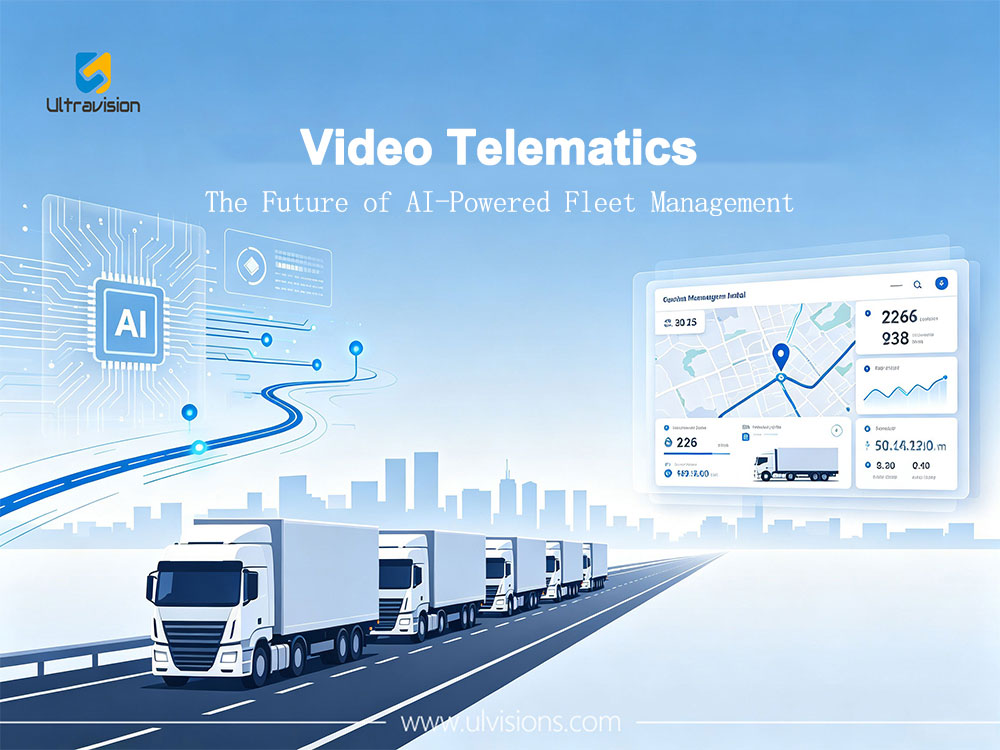
Video Telematics: The Future of AI-Powered Fleet Management
Overview
In the past decade, Enterprise fleet management system has changed significantly. What once primarily on GPS tracking, maintenance schedules, and basic camera monitoring had evolved into a more intelligent, connected, and data-driven method.
Today, AI-powered video telematics technology is important in modern fleet management. Integrating vehicle telematics, AI technology, cameras, GPS positioning, and sensors, fleet operator can get comprehensive visibility into their fleets' on-road operations.
Instead of simply answering “Where is the vehicle?”, an advanced fleet management system can help answer more important questions:
What is happening around the vehicle?
What is the driver doing?
Why did a safety event occur?
Is the driver showing signs of risky behavior?
What happened before an incident and after?
How fleet operators can reduce vehicle accidents, downtime, and operating costs?
What Is Video Telematics and How It Work?
Video telematics is integrated vehicle telematics data with camera monitoring and intelligent analytics. It can improve fleet operators' visibility to combine fleet information such as GPS data, vehicle speed, engine data and driver behavior with video footage from cameras installed around a vehicle.
In the past, A telematics fleet management system can tell fleet operator that a vehicle experienced harsh braking at a location and time. A video telematics solution can provide overall vehicle info by showing what happened before the event.
For example, the video telematics system can identify:
● A vehicle traveling at a speed during a time.
● A sudden braking event.
● The vehicle's exact GPS location.
● A road video footage by forward-facing camera.
● Driver behavior captured by driver-facing camera.
● AI analyzing the event for potential risks.
● A video clip being uploaded to the fleet management platform for review.
This combination of data creates a more complete picture of vehicle and driver activity.
The Role of AI in Video Telematics
Artificial intelligence is one of the most important developments in modern video telematics.
Traditional camera monitoring system just record video. Someone must manually review the footage when an incident occurs. AI-powered video telematics take a different method by real time analyzing visual and vehicle data to identify potentially significant events.
Depend on the video telematics system and configuration, AI analytics can help identify events such as:

● Distracted driving
● Mobile phone use
● Driver fatigue or drowsiness
● Seatbelt violations
● Tailgating
● Harsh acceleration
● Harsh braking
● Sudden lane changes
● Collision risks
● Unsafe following distances
● Unauthorized vehicle use
The objective is not simply to collect more data. It is to transform large amounts of raw sensor and video data into actionable insights for fleet operators.
Video Telematics is Matter in Modern Fleet Management
Modern fleet management take deeper insights into control fleet safety, efficiency, and operating costs; not just vehicle location.
While vehicle location data tracks a vehicle's movements, it fails to provide the overall information needed to answer critical questions regarding fleet operation—such as whether driver behavior is causing unnecessary fuel waste or what actually caused accident.
Video provides context.
Improve Driver Safety
Unsafe driver behavior directly impact fleet safety. Speeding, rapid acceleration and deceleration, hard braking, distracted driving, and fatigue driving all increase the risk of accidents and vehicle maintenance costs.
Video telematics technology make fleet managers to get insight into drivers' habits without rely on driver self-report.
For example, when a driver frequently engages in hard braking or distracted driving, fleet managers analyze the specific driving conditions involved and provide targeted coaching.
The safety management will be more proactive. Instead of responding only after accident, enterprise can use video telematics data to identify potentially unsafe driver behavior before it results in a serious incident.
Provide Evidence After Incident
One of the practical benefits of video telematics is the ability to provide objective evidence.
Following a collision or other road incident, fleet operators may need to understand:
● What happened?
● Where did it happen?
● What happened immediately before the event?
● Was the driver distracted?
● Was another vehicle involved?
● Did the driver take evasive action?
Without video evidence, it is difficult for companies to prove their innocence. Combining video footage with vehicle telematics data allows for the construction of a clearer timeline and chain of evidence.
Enhance Fleet Visibility
Modern fleet management systems collect data from various vehicle telematics devices into a unified platform, thereby eliminating information silos.
GPS data, vehicle remote diagnostics, fuel consumption data, and video monitoring footage are no longer fragmented; instead, business owners can get a comprehensive overview of all information through an integrated dashboard.
This creates a more comprehensive operational view of the fleet.
Fleet Risk Management
Fleet risk management is not about reduce accident. It's a process of identifying, measuring, and control operational risks while improve the whole performance of fleet.
For enterprise, effective fleet risk management method will improve operational efficiency and ROI.
Identify High Risk Driver Behavior
Different driver have different level of risk, and not every risk event requires the same response.
A data-driven fleet risk management strategy helping fleet operators identify recurring patterns.
For example, fleet manager can discover that:
● A particular route has frequent harsh braking event.
● Someone drivers consistently exceed speed limits.
● A vehicle often operational anomalies.
● Distract driving events occur more frequently during particular periods.
● Specific types of vehicles often need higher maintenance requirements.
These insights allow enterprise move from generalized safety policies toward to targeted interventions.
Proactive Fleet Risk Management
Traditional fleet safety programs often focus on what happens after accident.
AI powered video telematic solutions enable a more proactive method.
By detect potentially risky behavior in near real-time, fleet management platform can help enterprise intervene before a minor behavioral issue becomes a major safety event.
This can involve:
● Driver coaching
● Safety alerts
● Performance monitoring
● Policy enforcement
● Driver training
● Route optimization
● Prevention maintenance
The ultimate object is to create a continuous improvement cycle: detect → analyze → intervene → measure → improve.
Fleet Risk Management and ROI
Fleet safety and financial performance are close connect.
Vehicle accident result in direct cost such as repairs, insurance claims, downtime, and replacement vehicles. and the indirect costs related to lost productivity, administrative work, reputational damage, and customer disruption.
By reduce avoidable incidents and improve fleet utilization, effective fleet risk management strategy support stronger ROI.
For this reason, video telematics should not be viewed as a safety technology. It can also become an operational intelligence tool.
Choosing the Right Fleet Management Service Providers
The fleet management provider market has expanded rapidly as businesses increasingly adopt connected vehicle technologies.
However, fleet management service provider offer different combination of hardware, software, AI capabilities, flexibility, and pricing.
When evaluating a provider, enterprises need to know several factors.
Hardware Design and Reliability

Hardware is the foundation of connected fleet.
Camera, telematics device, GPS module, sensor, and communication component must operate reliably in harsh environment.
For this reason, fleet operator should look beyond software dashboard and consider the underlying hardware architecture.
Software Integration and Flexibility
Modern enterprise fleet management system should be flexible enough to integrate with an enterprise's existing system and workflow.
Businesses may need to connect fleet data with:
● ERP system
● Transportation management systems
● Maintenance platforms
● Driver management systems
● Customer applications
● Business intelligence tool
Flexible software platform make it easier for enterprise to adapt the system as their requirement evolve.
Total Cost of Ownership
Price is another important consideration.
Fleet management provider usually use different commercial models, including hardware cost, software subscription, connectivity fee, installation charge, and additional charge for advanced feature.
Enterprise should evaluate the total cost of ownership (TCO) rather than focus on the hardware price.
Ultravision focus on combining reliable hardware design with a flexible software platform while maintaining an affordable price strategy. This approach is intended to give fleet operator access to video telematics and intelligent fleet management capabilities without high hardware and subscription cost.
For enterprise deploy system across large fleet, this cost consideration become particularly important.
Connected Fleet
The evolution of fleet telematics technology is progressing from "tracking" to "visualization" and to "intelligence."
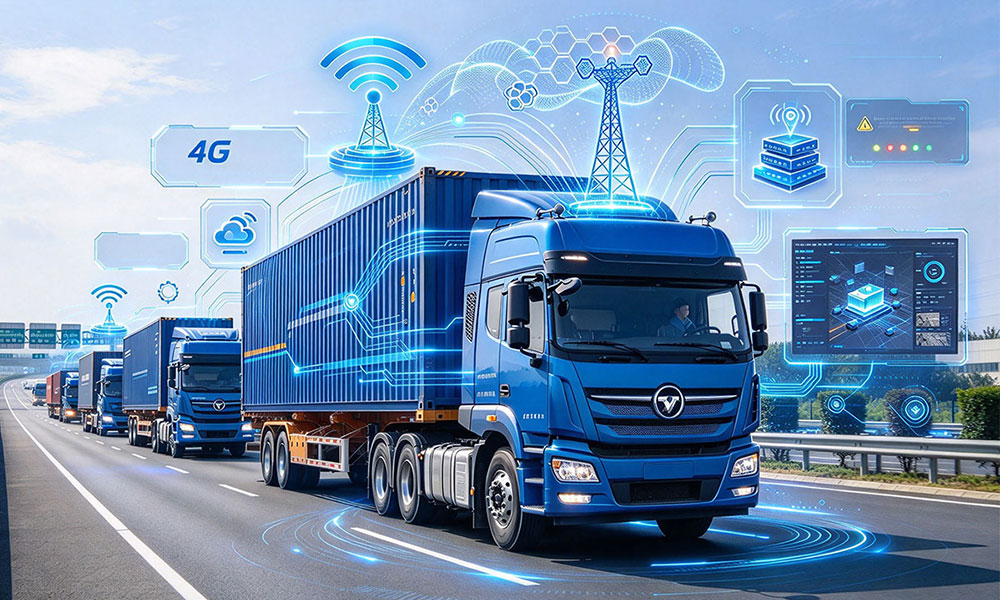
While early fleet management systems focused on GPS tracking, next-generation system capture more comprehensive vehicle data, integrate functions such as vehicle diagnostic, fuel monitoring, maintenance data, and driver behavior analysis.
Today, the development of connected fleet system centers on video telematics, edge computing, cloud platforms, and AI-driven analytics.
What Is Connected Fleet?
Connected fleet is one in which vehicles continuously exchange data with fleet management software platforms and other systems.
Depending on the architecture, connected vehicle data can include:
● GPS location
● Vehicle speed
● Engine information
● Fuel consumption
● Diagnostic information
● Camera footage
● Driver behavior
● Environmental conditions
● Sensor data
The value of a connected fleet comes from bringing these individual data sources together.
Why AI Matter for Enterprise Fleet Management System
Large fleet generate enormous amounts of data every day.
The challenge is no longer collect data. It determine which information matter.
AI-powered enterprise fleet management system help prioritize key event and identify pattern that be difficult to detect through manual analysis.
For example, rather than ask fleet manager to watch hours of video, AI video telematics can identify specific event that require attention.
This can significantly improve the efficiency of fleet management teams.
The Future of Telematics Fleet Management System
The future of telematics fleet management system is involve deeper integration between vehicle data, video analytics, AI, and enterprise software.
As AI technology continue to mature, fleet management system can increasingly move toward predictive and prescriptive capability.
Instead of simply reporting that an event occurred, future systems will increasingly help answer:
● Why it happen?
● What may happen next?
● What action should take?
This represents a fundamental shift from monitoring to decision support.
Built More Intelligent Fleet Management Strategy
For enterprise considering video telematics, technology adoption should connected to clear operational objective.
A successful implementation typically start by identify the most important business problem.
For example, enterprise want to:
● Reduce fleet accident rate.
● Enhance fleet driver safety.
● Reduce vehicle downtime.
● Improve fleet utilization.
● Strengthen incident investigation.
● Reduce insurance cost.
● Improve fleet operational visibility.
● Build a foundation for AI-powered fleet optimization.
When objective are defined, enterprise can determine which combination of camera, telematics device, sensor, software, and analytics is required.
The best fleet management solution isn't usually with the largest number of feature. It's convert relevant data into measurable business value.
Conclusion
Modern fleet management is beyond basic GPS tracking.
Fleet operators can get overall view into their fleet's operations, thanks to the maturation of artificial intelligence and video telematics technology, which enable easy access to vehicle data, driver behavior, video evidence, and sensor information.
This create new growth opportunities for enterprise—whether by enhance fleet safety, strengthen risk management, reduce operate cost, or improve operation efficiency.
Naturally, select a right fleet management solutions provider is crucial. When evaluate options, fleet operator should consider not only software features but also other hand that hardware reliability, platform flexibility, integration capabilities, scalability, and the total cost of ownership.
Ultravision through a combination of hardware design and flexible software platform, making intelligent fleet technology more accessible and adapt for different fleet applications.
In short, collect vehicle data is the beginning; the true value is how to leverage these data and transform into action. AI-driven decision analysis will help enterprise built safer, more efficient, and smarter fleet operations.
As smart fleet technology continues to develop, enterprise which can effective leverage fleet data to drive business growth decision will be well-positioned to built the next generation of smart fleets.


CONTACT US
Name:*
*Email:*
*Phone:*
*Country:*
*Company:*
*Message:*
*

| ▊ ABOUT US | ▊ PRODUCTS | ▊ INDUSTRIES |
| Why Ultravision | MDVR | Logistics |
| Our Technology | Dash Cam | Public Transit |
| News | Body Camera | School Bus |
| Blog | Vehicle Camera | Oil & Gas |
| ▊ RESOURCES | Accessories | Taxi |
| Software Partners | Law Enforcement | |
| Resource Package | ||
| Follow US | ||
  |

Shenzhen Ultravision Technology Co., Ltd. & Hongkong Ultravision Technology Co., Limited. All Rights Reserved. |